
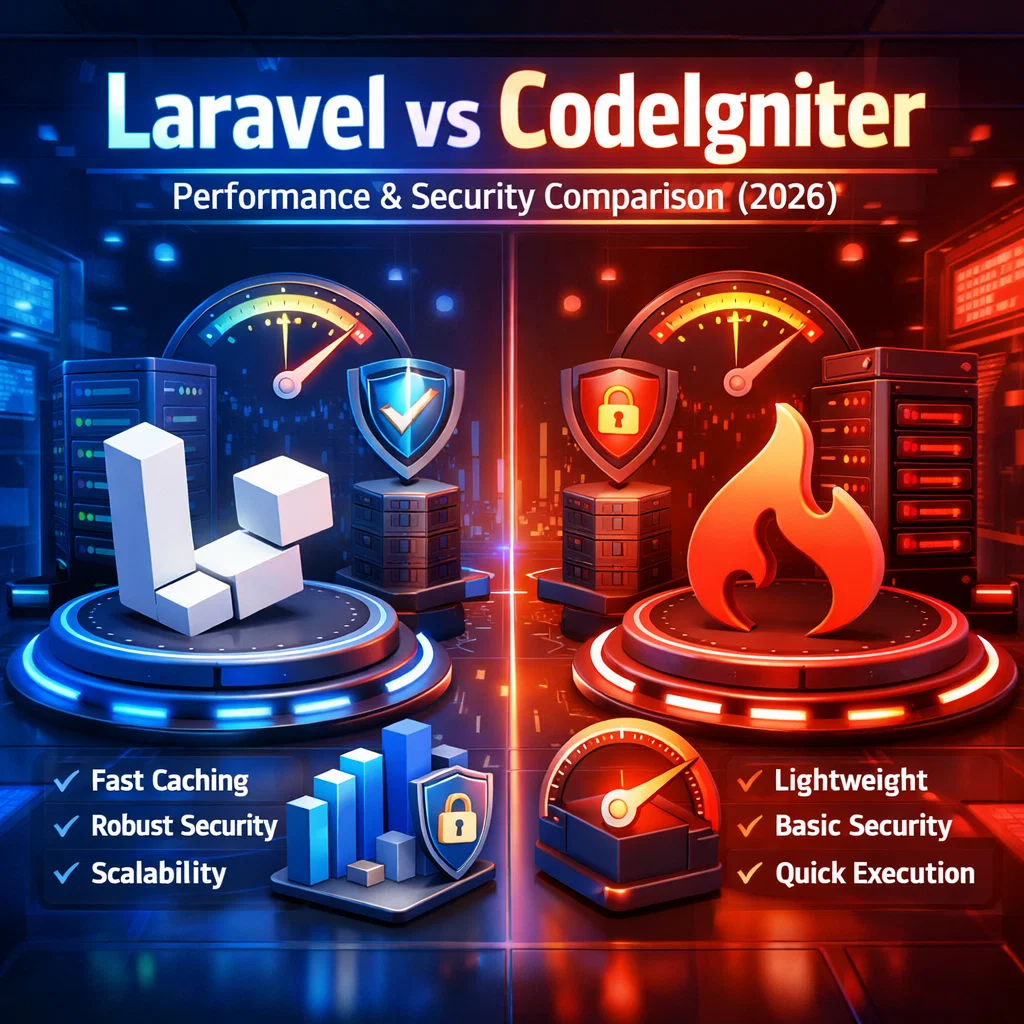
1: Performance: Speed, Scalability & Efficiency
Raw Performance
- CodeIgniter is consistently faster out-of-the-box due to its lightweight core and minimal overhead. Benchmarks show CodeIgniter typically has lower response times and higher throughput in simple request scenarios. jidt.org+1
- Laravel, while heavier, performs competitively under load when optimized with caching, queues, and other built-in tools—making it capable for scalable, high-traffic applications. pansofic.com+1
Why This Happens
- Laravel’s feature-rich stack (Eloquent ORM, Blade, middleware, queue management) adds overhead compared to CodeIgniter’s lightweight request handling. jidt.org
- With performance optimization (e.g., route caching, Redis cache, database indexing), Laravel can significantly narrow the gap for real-world workloads.
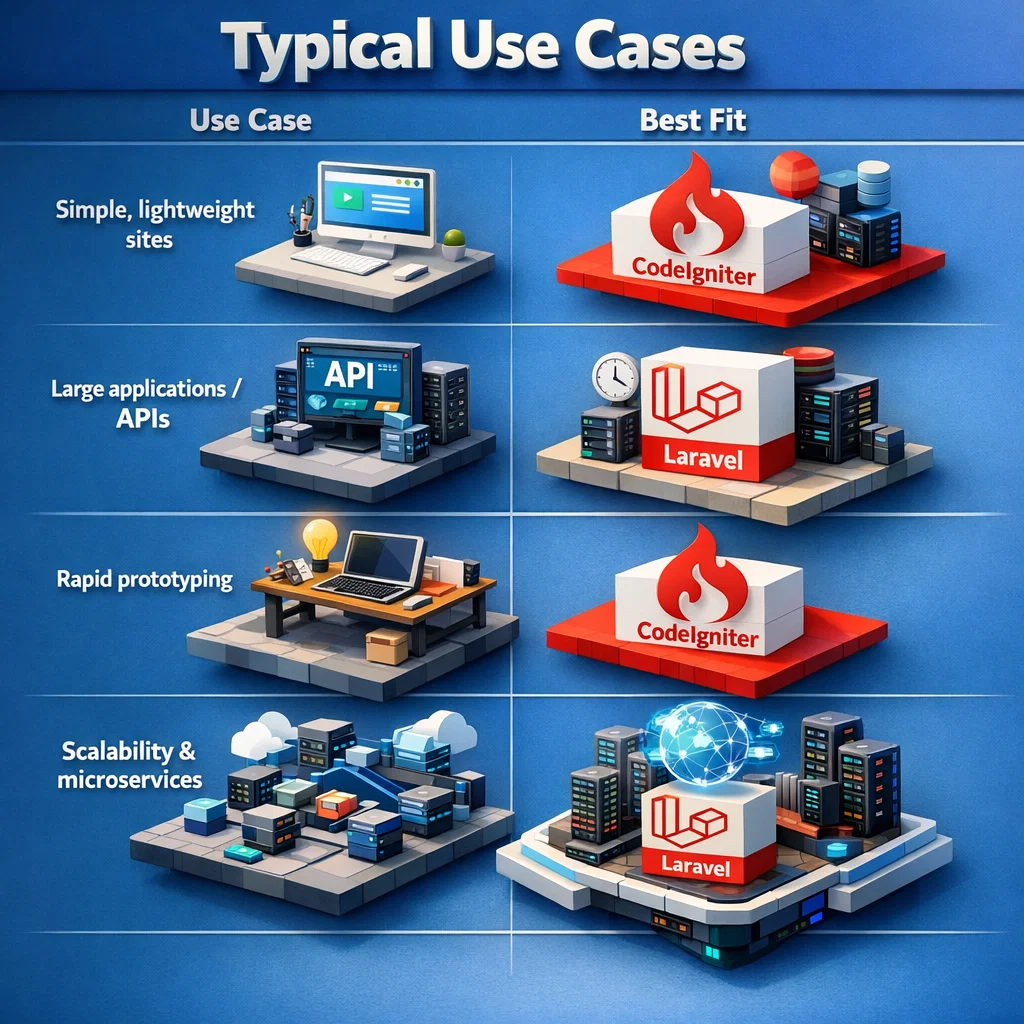
- Summary: CodeIgniter often wins in raw speed and resource efficiency, while Laravel shines in scalable and complex environments when tuned properly. jidt.org+1
2. Security: Built-In Protection vs Manual Setup
️ Built-In Security Features
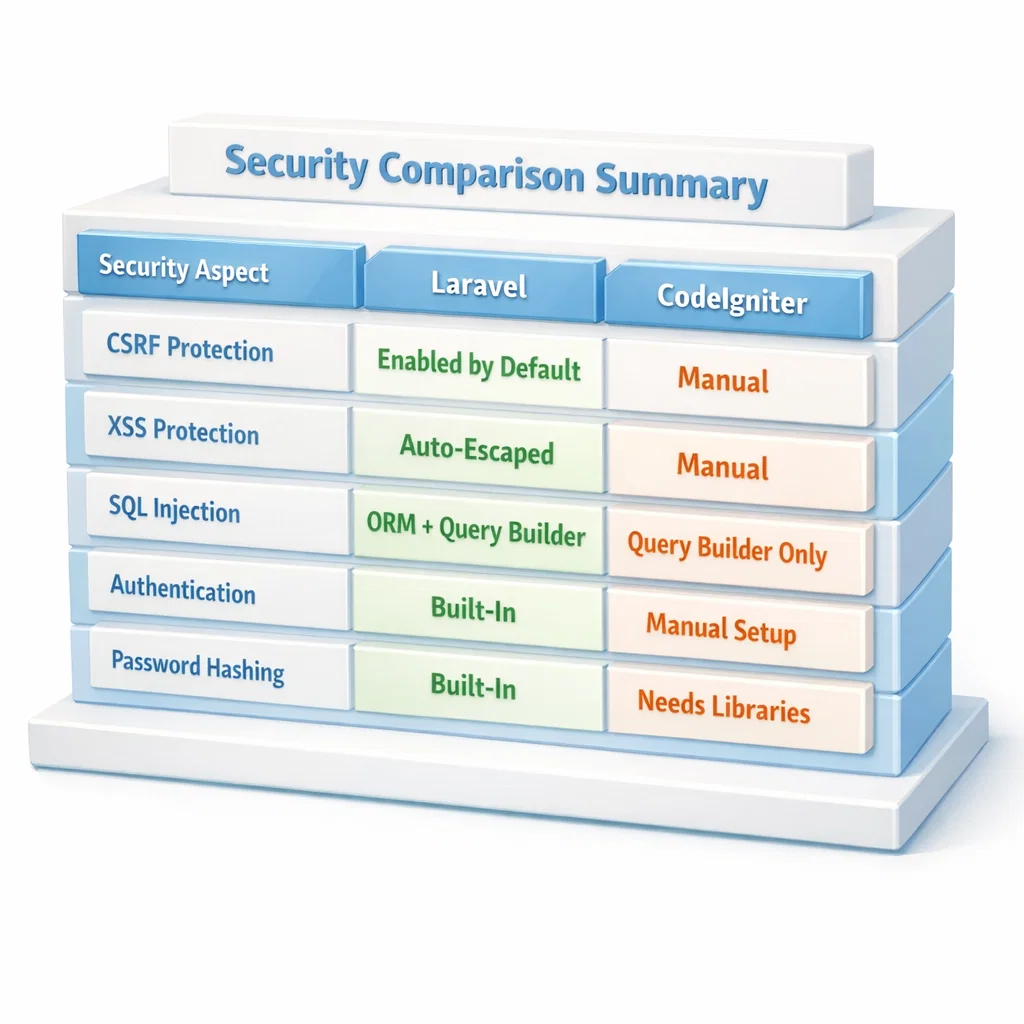
- Laravel excels with robust default protections:
- Automatic CSRF protection via middleware
- Blade templating auto-escapes output (mitigating XSS)
- Eloquent ORM guards against SQL injection
- Built-in authentication & authorization systems
- Modern password hashing (Bcrypt / Argon2) pansofic.com+1
- CodeIgniter’s approach:
- Includes core helpers like XSS filtering and input validation, but many features (CSRF, encryption, password hashing) need manual configuration or extra libraries. Cantech+1
What This Means
- Laravel’s security is opinionated and integrated—reducing developer mistakes and out-of-the-box vulnerabilities. jidt.org
- CodeIgniter gives developers flexibility but more responsibility to implement strong protections correctly.
3. Developer Experience & Ecosystem (Impacting Performance & Security)
Ecosystem Influence
- Laravel’s ecosystem (Forge, Vapor, Horizon, Breeze/Jetstream) speeds up development of auth, APIs, queues, monitoring, and deployment. pansofic.com
- CodeIgniter’s ecosystem is smaller; many features are added manually or via third-party packages. KaaShiv InfoTech
Learning Curve
- Laravel’s learning curve is steeper due to rich features and conventions. devdiligent.com
- CodeIgniter is easier for beginners and quick MVPs. devdiligent.com
This matters because developer efficiency influences how well performance optimizations and security best practices get implemented.
Final Recommendation (2026)
Choose Laravel if you want:
- Strong defaults for security and modern best practices
- Built-in tooling for queues, caching, and testing
- Scalability and long-term maintainability
- Large ecosystem and community support
Choose CodeIgniter if you want:
- Maximum raw performance and minimal overhead
- Simple projects or ultra-light APIs
- Easy learning curve and rapid initial development
Bottom Line
CodeIgniter is faster and leaner for lightweight apps, while Laravel is more secure, scalable, and developer-friendly for complex, modern applications—even at some performance cost.